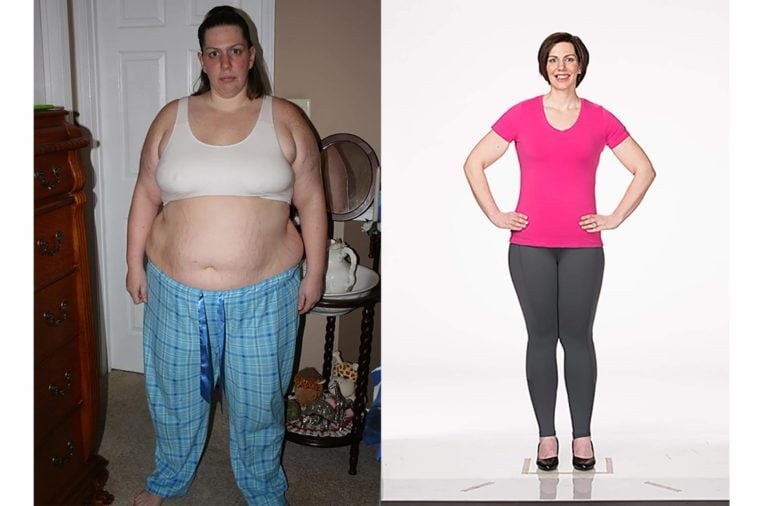
1. Choose a low-carb diet
If you want to lose weight you should start by avoiding sugar and starch (like bread). This is an old idea: For 150 years or more there have been an infinite number of weight-loss diets based on eating fewer carbs. What’s new is that dozens of modern scientific studies have proven that, yes, low carb is the most effective way to lose weight.
Obviously, it’s still possible to lose weight on any diet – just eat fewer calories than you burn, right? The problem with this simplistic advice is that it ignores the elephant in the room: Hunger. Most people don’t like to “just eat less”, i.e. being hungry forever. That’s dieting for masochists. Sooner or later a normal person will give up and eat, hence the prevalence of “yo-yo dieting”.
The main advantage of the low carb diet is that they cause you to want to eat less. Even without counting calories most overweight people eat far fewer calories on low carb. Sugar and starch may increase your hunger, while avoiding them may decrease your appetite to an adequate level. If your body wants to have an appropriate number of calories you don’t need to bother counting them. Thus: Calories count, but you don’t need to count them.
A 2012 study also showed that people on a low-carb diet burned 300 more calories a day – while resting! According to one of the Harvard professors behind the study this advantage “would equal the number of calories typically burned in an hour of moderate-intensity physical activity”. Imagine that: an entire bonus hour of exercise every day, without actually exercising.
Bottom line: A low-carb diet reduces your hunger and makes it easier to eat less. And it might even increase your fat burning at rest. Study after study show that low carb is the smart way to lose weight and that it improves important health markers.
People give Good result after using this product Click here to see the product
2. Eat when hungry
Don’t be hungry. The most common mistake when starting a low carb diet: Reducing carb intake while still being afraid of fat. Carbs and fat are the body’s two main energy sources, and it needs at least one of them.
Butter and olive oil
Low carb AND low fat = starvation
Avoiding both carbs and fat results in hunger, cravings and fatigue. Sooner or later people can’t stand it and give up. The solution is to eat more natural fat until you feel satisfied. For example:
Butter
Full-fat cream
Olive oil
Meat (including the fat)
Fatty fish
Bacon
Eggs
Coconut oil, etc.
Top 10 ways to eat more fat
Always eat enough, so that you feel satisfied, especially in the beginning of the weight-loss process. Doing this on a low-carb diet means that the fat you eat will be burned as fuel by your body, as your levels of the fat storing hormone insulin will be lowered. You’ll become a fat-burning machine. You’ll lose excess weight without hunger.
Do you still fear saturated fat? Don’t. The fear of saturated fat is based on obsolete theories that have been proven incorrect by modern science. Butter is a fine food. However, feel free to eat mostly unsaturated fat (e.g. olive oil, avocado, fatty fish) if you prefer. This could be called a Mediterranean low-carb diet and works great too.
Eating when hungry also implies something else: If you’re not hungry you probably don’t need to eat yet. When on an LCHF diet you can trust your feelings of hunger and satiety again. Feel free to eat as many times per day that works best for you.
Some people eat three times a day and occasionally snack in between (note that frequent snacking could mean that you’d benefit from adding fat to your meals, to increase satiety). Some people only eat once or twice a day and never snack. Whatever works for you. Just eat when you’re hungry.
3. Eat real food
Another common mistake when eating a low-carb diet is getting fooled by the creative marketing of special “low carb” products.
Real food is what humans have been eating for thousands or (even better) millions of years, e.g. meat, fish, vegetables, eggs, butter, olive oil, nuts etc.
If you want to lose weight you’d better avoid special “low-carb” products that are full of carbs. This should be obvious, but creative marketers are doing all they can to fool you (and get your money). They will tell you that you can eat cookies, pasta, ice cream, bread and plenty of chocolate on a low-carb diet, as long as you buy their brand. They’re full of carbohydrates. Don’t be fooled.
Bad Food
How about low-carb bread? Be careful: if it’s baked with grains it’s certainly not low carb. But some companies still try to sell it to you as a low-carb option.
Low-carb chocolate is usually full of sugar alcohols, which the manufacturer does not count as carbs. But roughly half of these carbs may be absorbed, raising blood sugar and insulin. The rest of the carbs ends up in the colon, potentially causing gas and diarrhea. Furthermore, any sweeteners can maintain sugar cravings.
Here are three examples of what to avoid:
Atkins’ fairy-tale cookies
Julian Bakery’s high-carb low-carb bread
The Dreamfields pasta fraud (that finally resulted in an 8 million dollar fine!)
These three companies are not unique. There are thousands of similar companies trying to trick you into buying their “low carb” junk food, full of starch, sugar alcohols, wheat flour, sweeteners and strange additives. Two simple rules to avoid this junk:
Don’t eat “low carb” versions of high carb stuff, like cookies, bars, chocolate, bread, pasta or ice cream – unless you are SURE of the ingredients (perhaps from making it yourself).
Avoid products with the words “net carbs” on them. That’s usually just a way to fool you.
Focus on eating good quality, minimally processed real food. Ideally the food you buy shouldn’t even have a list of ingredients (or it should be very short).
Less moderation, more quality
Finally – forget about the failed “everything in moderation” diet motto of clueless dietitians. It’s terrible advice and Americans who eat a more diverse diet actually gain more weight.
Don’t eat everything in moderation. Eat as much healthy food as you can, whenever you are hungry. Eat as little unhealthy garbage as you can. If possible none at all.
I recommend this product because People That you this product will good result about it Click here to see the product.
4. Eat only when hungry
On a low-carb diet you should aim to eat when hungry (see tip #2 above). And if you’re not hungry? Don’t eat. Nothing slows down weight loss more than frequently eating a lot of food that you do not need. This, in fact, is so important that it’s worth this section of it’s own.
Reduce unnecessary snacking
Unnecessary snacking can be a problem on LCHF too. Some things are easy to eat just because they’re tasty and easily available. Here are three common traps to watch out for on LCHF:
Dairy products such as cream and cheeses. They work well in cooking as it satisfies. The problem is if you’re munching a lot of cheese in front of the TV in the evening… without being hungry. Be careful with that. Or lots of cream with dessert, when you’re actually already full and just keep eating because it tastes good. Or another common culprit: loads of heavy cream in the coffee, many times per day.
Nuts. It’s very easy to eat until the nuts are gone, regardless of how full you are. A tip: According to science, salted nuts are harder to stop eating than unsalted nuts. Salted nuts tempt you to more overeating. Good to know. Another tip: Avoid bringing the entire bag to the couch, preferably choose a small bowl instead. I often eat all the nuts in front of me, whether I’m hungry or not.
LCHF baking. Even if you’re only using almond flour and sweeteners snacking on baked goods and cookies usually provides additional eating when you’re not hungry… and yes, this will slow down weight loss.
Feel free to skip meals
Don't eat by the clockDo you have to eat breakfast? No, of course not. Don’t eat if you’re not hungry. And this goes for any meal.
On a strict LCHF diet the hunger and urge to eat tends to decrease a lot, especially if you have excess weight to lose. Your body may be happily burning your fat stores, reducing the need to eat.
If this happens, be happy! Don’t fight it by eating food you don’t want. Instead wait for the hunger to return before you eat again. This will save you both time and money, while speeding up your weight loss.
Some people fear that they will lose control if they don’t eat every three hours, thus making them eat thousands of calories and blowing their diets completely. So they obsessively snack all the time.
This obsessive snacking may be necessary on a diet high in sugar/processed carbs to control hunger cravings, but it’s usually completely unnecessary on an LCHF diet. Hunger will only slowly return and you’ll have plenty of time to prepare food or grab a snack.
Summary
To lose weight quickly and sustainably: Eat when you’re hungry – but only when you’re hungry. Forget the clock and listen to your body instead.
Breakfast! Is It Really That Important? – Dr. Jason Fung
Breakfast! Is It Really That Important? – Dr. Jason Fung
07:08
Dr. Fung's fasting course part 6: Is it really that important to eat breakfast?
The Key to Obesity – Dr. Jason Fung
The Key to Obesity – Dr. Jason Fung
44:22
How insulin toxicity causes obesity and type 2 diabetes – and how to reverse it. Dr Jason Fung at the LCHF Convention 2015.
The 7 Benefits of Fasting – Dr. Jason Fung
The 7 Benefits of Fasting – Dr. Jason Fung
07:33
Dr. Fung's fasting course part 4: About the 7 big benefits of fasting intermittently.
5. Measure your progress wisely
Tracking successful weight loss is sometimes trickier than you’d think. Focusing only on weight and stepping on the scale every day might be misleading, cause unnecessary anxiety and undermine your motivation for no good reason.
The scale is not necessarily your friend. You may want to lose fat – but the scale measures muscles, bone and internal organs as well. Gaining muscle is a good thing. Thus weight or BMI are imperfect ways to measure your progress. This is especially true if you’re just coming off a long period of semi-starvation (calorie counting), as your body may want to restore lost muscles etc. Starting weight training and gaining muscle can also hide your fat loss.
Losing fat and gaining muscles means great progress, but you may miss this if you only measure your weight. Thus it’s smart to also track the disappearance of your belly fat, by measuring your waist circumference.
Waist circumference
Here’s how to do it:
Put the measuring tape around your middle, like in the picture above, slightly above your belly button (to be exact: at the midpoint between your lowest rib and the top of your hipbone, at your side)
Exhale and relax (don’t suck in your stomach)
Make sure the measuring tape fits snuggly, without compressing your skin
Measure
Compare your result to these recommendations:
Waist circumference guide
I recommend aiming for “excellent” but it’s not always realistic. Young people can usually achieve this, but for some middle-aged or older women it may be a major victory to get all the way to “decent”.
Measuring progress
I suggest measuring your waist circumference and weight before starting your weight-loss journey and then perhaps once a week or once a month. Write the results down so that you can track your progress. If you want, you can measure more areas: around the buttocks, the chest, the arms, legs, etc.
Note that your weight can fluctuate up and down several pounds from day to day, depending on fluid balance and stomach contents: Don’t worry about short term changes, instead follow the long-term trend.
If you can, try to check other important health markers when starting out, like these:
Blood pressure
Blood sugar (fasting blood glucose and/or HbA1c)
Cholesterol profile (including HDL, triglycerides)
These markers are almost universally improved on a low carb diet, even before major weight loss. Re-checking these health markers after a few months can be great for your motivation as they’ll usually show that you’re not just losing weight, you’re gaining health too.
I recommend this product because People That you this product will good result about it Click here to see the product.
Use any piece of string. Wrap the string around your waist and cut the string to fit your waist on day one. This string could magically appear to become longer and longer every week you wrap it around your waist.
Comparing how an old pair of jeans fits is also a good option.
6. Be persistent
hourglass
It usually takes years or decades to gain a lot of weight. Trying to lose it all as quickly as possible by starving yourself rarely works well long-term, that’s just a recipe for “yo-yo dieting”. To succeed, you need something that works long term.
What to aim for
It’s common to lose 2-6 pounds (1-3 kg) within the first week on a strict low-carb diet, and then on average about one pound (0.5 kg) per week as long as you have a lot of weight remaining to lose. This translates into about 50 pounds (23 kilos) per year.
Every 5 pounds of fat loss roughly equals 1 inch lost around the waist (1 kilo = 1 cm).
Young males sometimes lose weight faster than this, perhaps twice as fast. Post-menopausal women may lose at a slightly slower pace. People on a very strict low-carb diet may lose weight quicker, as well as those who exercise a lot (a bonus). And if you have an enormous amount of excess weight to lose you could start out much faster.
As you get closer to your ideal weight the loss may slow down, until you stabilize at a weight that your body feels is right. Very few people becomes underweight on a low carb diet – as long as they eat when hungry.
Examples: Weight-loss stories.
Initial stalls
Are you coming off a period of semi-starvation (calorie counting)? Focus on your waist circumference and health markers (see advice #4) at first as it sometimes takes several weeks before weight loss is apparent.
Weight-loss plateaus
Expect weight-loss plateaus: Days or weeks where nothing seems to happen on the scale. Everybody hits them. Stay calm. Keep doing what you’re doing and eventually things will start happening again (if not, check out the other 17 tips).
More: Why the scale may be lying to you, by Dr. Evelyne Bourdua-Roy
How to lose weight forever
Losing a lot of weight long-term and keeping it off forever won’t happen unless you change your habits forever. If you lose weight and then return to living exactly the way did when you gained weight, don’t be surprised when the excess weight returns. It will.
Maintaining weight loss requires long-term change and patience. If this doesn’t seem possible for you, then you’re perhaps more interested in one of these magical diet scams.
Forget quick fixes: If you lose some weight every month, eventually you’ll get rid of all your excess weight. That’s inevitable progress. That’s what you want.
PS: Long-term change is only hard in the beginning, especially during the first couple of weeks. It’s like quitting smoking. Once you develop new habits it becomes easier and easier every week. Eventually it comes naturally.
For inspiration and tips, check out some of our long-term weight maintenance success stories:
I recommend this product because People That you this product will good result about it Click here to see the product.
7. Avoid eating fruit
This piece of advice is controversial as fruit has an almost magical health aura today. People may believe that fruit is nutritious but unfortunately fruit contains a lot of sugar – around 10% by weight (the rest is mostly water). Just taste an orange or a grape. Sweet, right?
Woman with FruitFive servings of fruit per day are equivalent to the amount of sugar in 16 ounces of soda (500 ml). Contrary to what many people believe, the sugar is more or less identical (about 50% glucose, 50% fructose).
Sugar from fruit can shut down fat burning. This can increase your hunger and slow your weight loss. For best results avoid fruit – or enjoy it occasionally as a treat.
Bottom line: Fruit is candy from nature.
Low-Carb FruitsLow-carb fruits and berries – the best and the worst
Isn’t fruit natural?
Most people believe that fruit is natural, but today’s fruits in the grocery store have very little in common with what fruits looked like before they were cultured. There’s way more sugar in modern domesticated fruits.
banana1banana2
What fruits and vegetables looked like before
8. Avoid drinking beer
Beer Belly
Beer contains rapidly digested carbs that shut down fat burning. That’s why beer is sometimes referred to as “liquid bread”. There’s a good reason for the term “beer belly.”
Here are smarter alcoholic options for losing weight:
Wine (red or dry white)
Dry champagne
Hard liquor like whisky, cognac, vodka (avoid sweetened cocktails – try vodka, soda water, lime instead)
These drinks hardly contain any sugar/carbohydrates so they’re better than beer. However, large amounts of alcohol might slow weight loss somewhat, so moderation is still a good idea.
Low-Carb Fruits
Low‑carb alcohol –
the best and the worst
9. Avoid artificial sweeteners
Many people replace sugar with artificial sweeteners in the belief that this will reduce their calorie intake and cause weight loss. It sounds plausible. Several studies, however, have failed to show any positive effect on weight loss by consuming artificial sweeteners instead of plain sugar.
Artificial SweetenersInstead, according to scientific studies, artificial sweeteners can increase appetite and maintain cravings for sweet food. And one recent independent study showed that switching drinks with artificial sweeteners to water clearly helped women lose weight:
Study: Avoiding diet beverages helps women lose weight
This could be because the body increases insulin secretion in anticipation that sugar will appear in the blood. When this doesn’t happen, blood sugar drops and hunger increases. Whether this chain of events regularly takes place is somewhat unclear. Something odd happened when I tested Pepsi Max though, and there are well-designed studies showing increased insulin when using artificial sweeteners.
Furthermore, artificial sweeteners can maintain an addiction to sweets and lead to snack cravings. And the long-term effects of consuming artificial sweeteners are unknown.
Studies claiming to show neutral or positive effects of sweeteners are usually funded by the beverage industry.
By the way, Stevia is marketed as a natural alternative to artificial sweeteners. That’s marketing talk. There is nothing natural about a processed super-sweet white powder like Stevia.
If you’re having trouble losing weight I suggest that you completely avoid sweeteners. As a bonus you’ll soon start to enjoy the natural sweetness of real food, once you’re no longer adapted to the overpowering artificial sweetness of junk food and “diet” sodas.
Low-carb sweetenersFull low-carb sweeteners guide
Addiction
What Is Sugar Addiction? – Bitten Jonsson
What Is Sugar Addiction? – Bitten Jonsson
06:35
Bitten Jonsson's sugar-addiction course part 1: Insights and advice on how you can stop food and sugar cravings.
Do you find the idea of avoiding sweeteners almost impossible to imagine? Addiction to sugar and carbohydrate-rich foods is very common, but it’s possible to overcome. Check out our video course with addiction specialist Bitten Jonsson, RN.
Read more about artificial sweeteners
I recommend this product because People That you this product will good result about it Click here to see the product.
10. Review any medications
Many prescription drugs can stall your weight loss. Discuss any change in treatment with your doctor. Here are the worst three:
Insulin injections, especially at higher doses, are probably the worst obstacle for weight loss. There are three ways to reduce your need for insulin:
A. Eat fewer carbs, which makes it a easier to lose weight. The fewer carbs you eat the less insulin you need. Remember to lower your doses if you can.
B. If this isn’t enough, treatment with Metformin tablets (at a dose of 2–3 grams/day) can decrease the need for insulin (at least for type 2 diabetics).
C. If this is not enough to get off insulin (again, for type 2 diabetics) you could try newer promising drugs like Victoza or Byetta. These reduce the need for insulin and cause weight loss.
PillsOther diabetes medications. Insulin-releasing tablets (e.g. sulphonylureas) often lead to weight gain. These include: Minodiab, Euglucon, Daonil, and Glibenclamide. Tablets like Avandia, Actos, Starlix and NovoNorm also encourage weight gain. But not Metformin. The newer drugs Victoza and Byetta (injectable) often lead to weight loss, but possible long-term side effects are still unknown. More on diabetes
Cortisone as an oral drug is another common culprit (e.g. Prednisolone). Cortisone often causes weight gain in the long run, especially at higher doses (e.g. more than 5 mg Prednisolone per day). Unfortunately, cortisone is often an essential medication for those who are prescribed it, but the dose should be adjusted frequently so you don’t take more than you need. Asthma inhalers and other local cortisone treatments, like creams or nose sprays, hardly affect weight.
These other medications can also cause problems:
Neuroleptics/antipsychotic drugs, can often encourage weight gain. Especially newer drugs like Zyprexa (Olanzapine).
Some antidepressant medications can cause weight gain, especially the older tricyclic antidepressants (TCAs) such as Tryptizol, Saroten, and Clomipramine; as well as newer drugs such as Remeron (Mirtazapine). Lithium (for manic-depressive disorder) often causes weight gain. The most common antidepressants known as SSRI’s (for example Citalopram and Sertraline) usually don’t impact weight significantly. More on depression
Some contraceptives often contribute to slight weight gain, especially those that contain only progesterone and no estrogen, for example the mini-pill, the contraceptive injection, or a contraceptive implant. More on fertility
Blood pressure medication in the form of beta blockers can cause weight gain. These drugs include: Seloken, Metoprolol and Atenolol. More on high blood pressure
Epilepsy drugs may cause weight gain (e.g. Carbamazepine and Valproate).
Allergy medications, antihistamines can cause weight gain, especially at high doses. Cortisone is even worse (see above). More on allergies
Antibiotics can possibly lead to a temporary weight gain by disturbing the gut microbiota and increasing the amount of energy we absorb from food. This is still speculative for humans but it’s another reason not to use antibiotics unless you truly need it.
Use this product you will lose your weight quickly without side effect https://bit.ly/2Ic0nm8
11. Stress less, sleep more
sleep2
Have you ever wished for more hours of sleep, and a less stressful life in general? Most people have – stress and lack of sleep can be bad news for their weight.
Chronic stress may increase levels of stress hormones such as cortisol in your body. This can cause increased hunger and result in weight gain. If you’re looking to lose weight, you should review possible ways to decrease or better handle excessive stress in your life. Although this often demands substantial changes, even altering small things – such as posture – may immediately affect your stress hormone levels, and perhaps your weight.
You should also make an effort to get enough good sleep, preferably every night. Strive to wake up refreshed of your own accord, independently of the alarm clock. If you’re the kind of person who always gets brutally woken up by the alarm ringing, you might never be giving your body adequate rest.
One way to combat this is to go to bed early enough for your body to wake up autonomously before the alarm clock goes off. Letting yourself get a good night’s sleep is another way of reducing stress hormone levels.
Sleep deprivation, on the other hand, comes hand in hand with sugar cravings. It also has an adverse effect on self-discipline and makes it painfully easy to give in to temptation (it’s no coincidence that induced sleep deprivation is a common interrogation technique). Similarly, sleep deprivation weakens your resolve to work out.
Sleep issues?
Do you have trouble sleeping even if there’s ample time for it? Here are five tips from an expert:
sleep
Stick to the same bedtime every evening. In the long run, this will help your body prepare for sleep at that time.
No coffee after 2 pm. Just don’t – and remember that it takes time for caffeine to leave your body.
Limit your alcohol intake to three hours before bedtime. While booze might make you woozy, it worsens quality of sleep.
Limit exercise in the four hours before bedtime. Physical activity can make you wound up and make it difficult to go to sleep for several hours afterwards.
Get 15 minutes of sunlight every day. This is good for your circadian rhythm (your “body clock”).
Finally, make sure that your bedroom is dark enough, and stays at a pleasant temperature. Sleep well!
Difficult, but worthwhile
Many may find the above guidelines difficult to follow, perhaps because of a lack of time (or the equivalent – small children!). But stressing less and sleeping more doesn’t just feel good. It can also play a part in helping you get leaner.
Read more about the benefits of sleep
12. Eat less of dairy products and nuts
snacks
Can you eat as much as you like, and still lose weight? Yes, it tends to work just fine with a low-carbohydrate diet, as appetite regulation happens effortlessly.
However, despite the fact that a low-carbohydrate diet generally makes it easy to eat just enough, there are foods classified as low carb which become a problem in larger quantities. If you find yourself having a hard time losing weight on a low carb diet, you could try to be more careful with:
Dairy products (yoghurt, cream, cheese)
Nuts
Dairy products contain varying amounts of lactose (milk sugar), which slows down weight loss. What’s more, part of the protein in milk generates a significant insulin response, which can have the same effect. Consequently, cutting back on dairy products may accelerate weight loss. This applies especially to dairy products typically lacking in fat, such as regular milk and various yogurts, but be careful with full-fat dairy such as cream and cheese all the same. And don’t forget whey protein powder, which is pure milk protein.
Exempt from all these dairy-product warnings is butter, which is almost pure fat. Butter may be consumed liberally as desired.
Low-Carb and Dairy-Free Recipes
Nuts, the second food to watch, contain a fair amount of carbohydrate, and it’s very easy to unwittingly scarf down large quantities. Cashew nuts are among the worst carb-wise – you’ll find that they contain around 20% carbohydrate by weight. For someone following a strict LCHF diet with a 20 grams of carbs per day allowance, this means that consuming 100 grams (which happens in a flash!) will have filled their daily quota. Peanuts tend to be around 10-15% carbohydrate – not putting them in the clear either.
So, for those of you having trouble losing weight: use nuts sparingly. When in a situation where nuts are an absolute must, know that the most harmless ones carb-wise are macadamia nuts (usually around 5% carbs), or Brazil nuts (4%).
Low-Carb NutsLow-carb nuts – the best and the worst
13. Supplement vitamins and minerals
vitamins
Your body needs a certain amount of essential vitamins and minerals to function properly. What happens when you don’t get enough of them? What happens when you eat too little food, or when the food you eat isn’t sufficiently nutritious? Perhaps our bodies catch on and reply by increasing hunger levels. After all – if we eat more, we increase the chances of consuming enough of whatever nutrient we are lacking.
On the other hand, reliable access to vitamins and minerals could perhaps mean decreased hunger levels and decreased cravings, thereby promoting weight loss.
The above is, of course, speculation. But there are well-performed studies which suggest it might not be far from the truth.
Vitamin D
A lack of vitamin D is probably the most common deficiency in northern countries such as Canada, or most of the US. Three recent studies indicate that, when compared to a placebo, a vitamin D supplement can decrease your fat weight or waist measurement [1 2 3].
In one of the studies, 77 overweight or obese women received either a supplement of 1000 units of vitamin D, or a placebo, every day for 3 months. Those who took the vitamin D supplement decreased their body fat by 2.7 kg (6 pounds) – significantly more than the placebo group, who hardly decreased their fat weight at all.
Multivitamins
A study from 2010 involved around a hundred women with weight issues, separating them into three groups. One group received a daily multivitamin supplement, the other a daily calcium supplement, and the last group only a placebo. The study went on for six months.
Unsurprisingly, the results showed that nothing had happened to the weight of the women receiving calcium or the placebo. However, the group which took the multivitamin lost more weight – about 3 kg more – and improved their health markers. Among other things, their basal metabolic rate (the rate at which the body burns calories when at rest) increased.
Furthermore, another earlier study found that subjects decreased hunger levels by taking multivitamin supplements during starvation diets, compared to a placebo.
Conclusion
Nutrient-dense, good food is certainly the foundation of weight loss. But an adequate amount of vitamin D can be difficult to ingest via food. In the case of a lack of sun (such as during the darker months of fall and winter), it’s wise to supplement for multiple health reasons – and perhaps even for your weight.
If you’re overweight and not entirely sure that your diet provides enough nutrients, it may be worthwhile to take a multivitamin pill. Unfortunately, they still contain only minimal doses of vitamin D, so you need both for the full effect.
14. Use intermittent fasting
There are many things to consider before moving on to this tip #14, but don’t let this fool you. This is one of the most effective weapons available to lose weight. It’s perfect if you are stuck at a weight-loss plateau despite “doing everything right” – or to speed up your weight loss.
This super weapon is called intermittent fasting. It means exactly what it sounds like… not eating, during a specified time interval.
Recommended first option – 16:8
Probably the most popular option is fasting for 16 hours (including sleep), which is usually easy to do on an LCHF diet. It only requires trading breakfast for a cup of coffee (or some other non-caloric fluid) and having lunch as the first meal of the day. Fasting from 8 pm to 12 noon – for example – equals 16 hours of fasting.
Of course there are many other versions of intermittent fasting, but this 16:8 method (16 hours of not eating with an 8-hour eating window) is the one I recommend as a first option. It’s effective, easy to do and does not require counting calories.
You can do a 16:8 fast as often as you like. For example twice a week, or on weekdays only… or every single day. The more often you do it, the more effective it is.
In fact, on an LCHF diet some people spontaneously fall into this habit, as their appetite is reduced (see weight loss tip #4, eat only when hungry).
Other kinds of intermittent fasting
There are many other options. Basically, the longer periods are harder to do but more effective. Here are two more common options:
Fasting for 24 hours (often dinner – dinner) once or twice a week. Effective and can be surprisingly easy to do, especially on an LCHF diet.
The 5:2 diet. Eat as much as you need to feel satisfied 5 days of the week and then eat calorie-restricted on two days (500 calories per day for women, 600 calories for men). I don’t recommend this as it requires calorie counting and more planning, but some people still find they enjoy it.
What about eating when hungry?
Doesn’t advice on intermittent fasting contradict the advice to eat when hungry? Yes it does, somewhat.
I recommend eating when hungry as a first option, and I recommend always eating until you feel satisfied at meals. But if this is not effective enough, then intermittent fasting is a very powerful addition. Remember – and this is crucial – that between fasting periods you’re still supposed to eat until satisfied.
Intermittent fasting is not the same thing as obsessively counting calories and starving yourself 24-7, i.e. “caloric restriction as primary” (CRaP) diets. Starving yourself is a recipe for misery and failure.
Intermittent fasting is about eating all that your body needs… while still allowing it to sometimes briefly rest from constant feeding.
What’s acceptable to drink during fasts?
During a fast you can’t eat, but you should definitely drink. Water is the drink of choice, but coffee and tea are also great options. During longer fasts it can be wise to add a little salt too, or drink bouillon.
Anything you drink should ideally be zero calories. But it may be acceptable to cheat by adding a small amount of milk in your coffee or tea – if you absolutely need it to enjoy your drink.
What to eat between fasts
So what should you eat when you are not fasting? Well, if your goal is to lose weight I suggest following all the tips above, including eating an LCHF diet. Combining this with intermittent fasting is a great combination.
On a low-carb diet your hunger is reduced and it’s much easier to do a period of fasting. Also, your fat burning is already very good – so when fasting you’ll easily burn lots of fat.
So, while on a low-carb diet the fasting periods become both easier to do and more effective. 1 + 1 equals 3.
Who should not do intermittent fasting
Intermittent fasting can be a great idea, but not everyone should do it:
If you are addicted to food or sugar then intermittent fasting may increase food cravings and increases the risk of a relapse… so be very careful. I recommend always eating when hungry.
If you are totally stressed out or sleep deprived then take care or that problem first (see weight loss tip #11) or fasting may be too stressful for your body.
If you are on any medication – especially insulin – the doses may need to be adjusted when fasting. Discuss it with your doctor first.
Growing children, pregnant women and breastfeeding women should not do longer fasting periods, as they have an increased need of nutrients. I recommend eating when hungry and using the 14 tips above if you need to lose weight.
I recommend this Weight loss product because People That you this product will good result about it Click here to see the product.


No comments:
Post a Comment